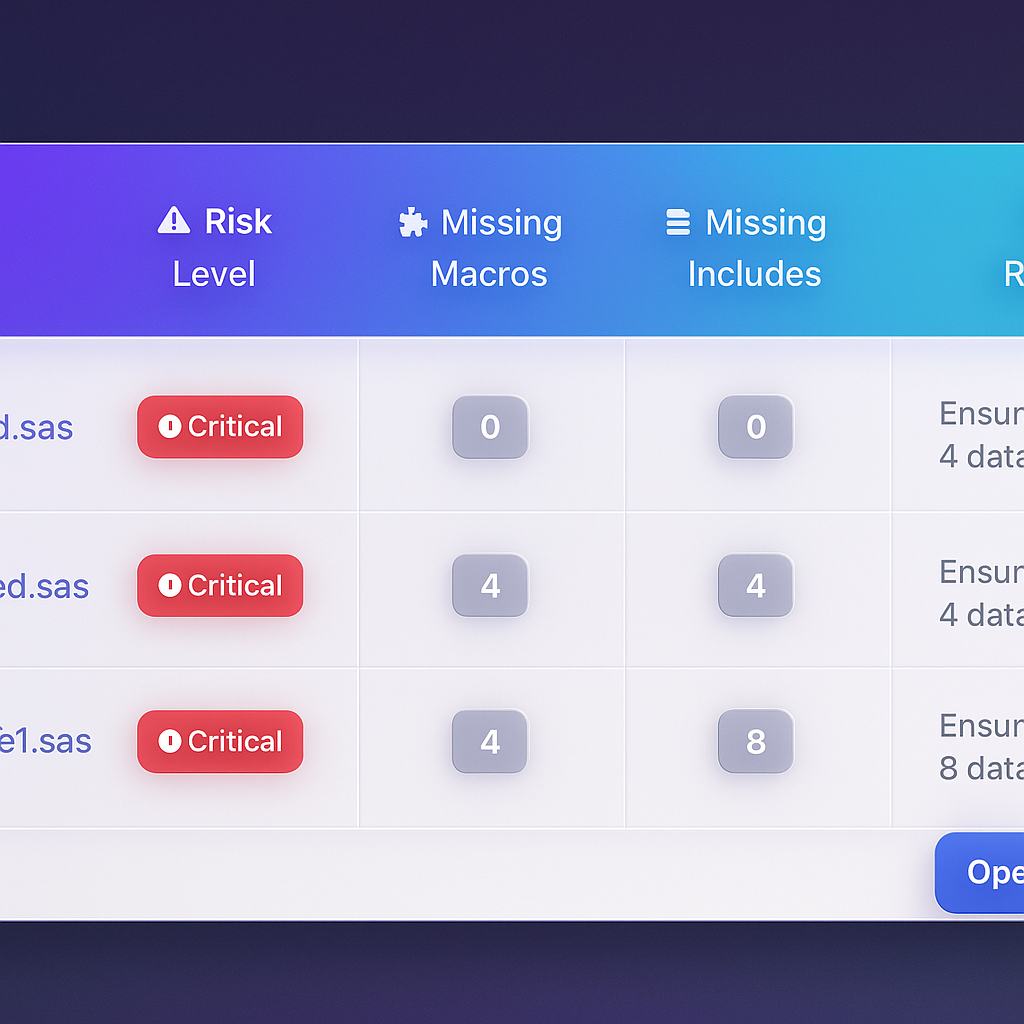
Risk and complexity
Scoring, dependency heat, and debt across the estate.
PyFluent Studio
Import the estate. Convert the framework. Watch lineage update as you edit. Match the new output to the baseline. Documentation is generated from the parse, not from a prompt.
Five steps. Your team runs them. No services contract required.
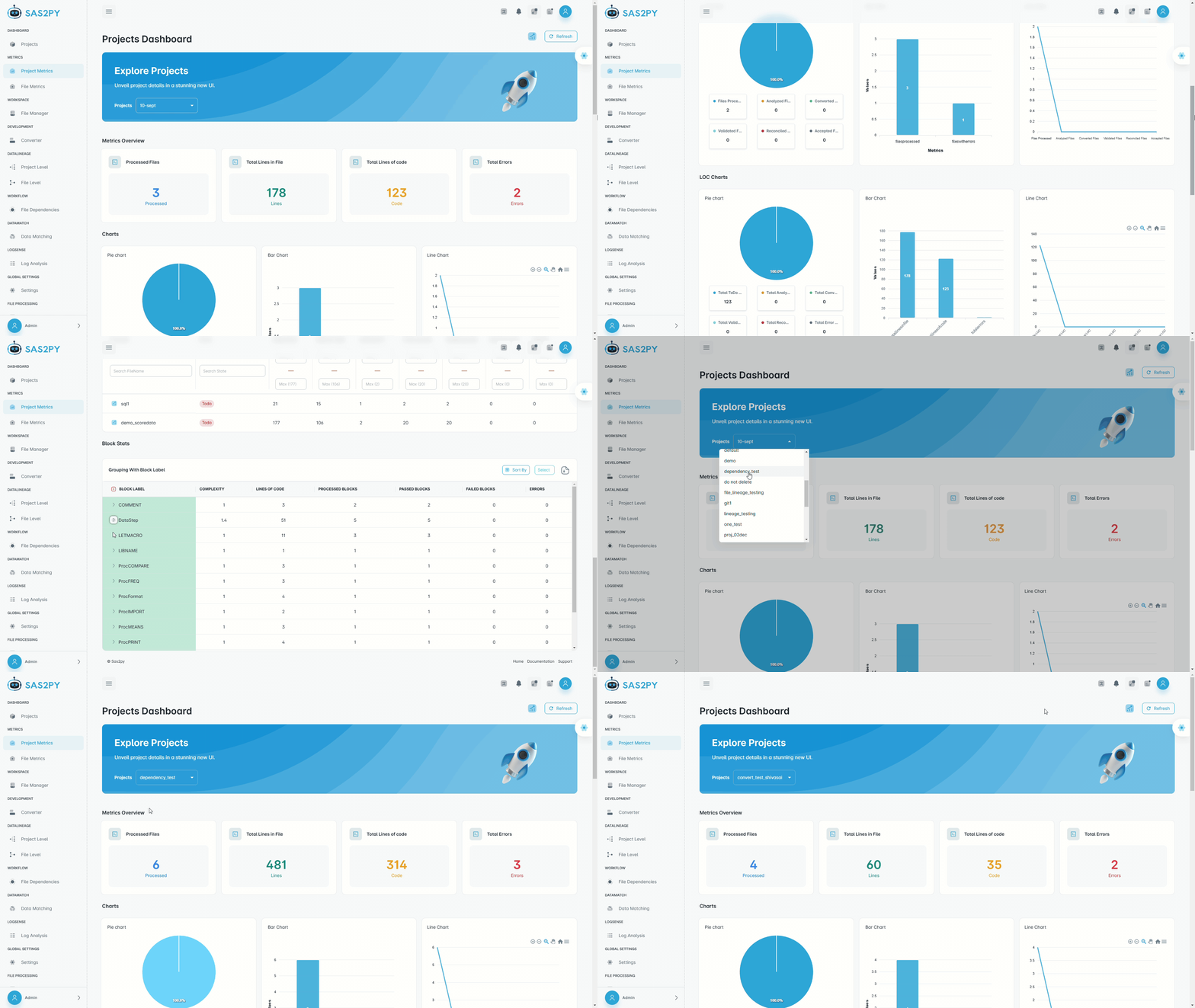
Python, pandas, PySpark, or SQL. The parser extracts lineage, STTM, and complexity without you marking anything up.
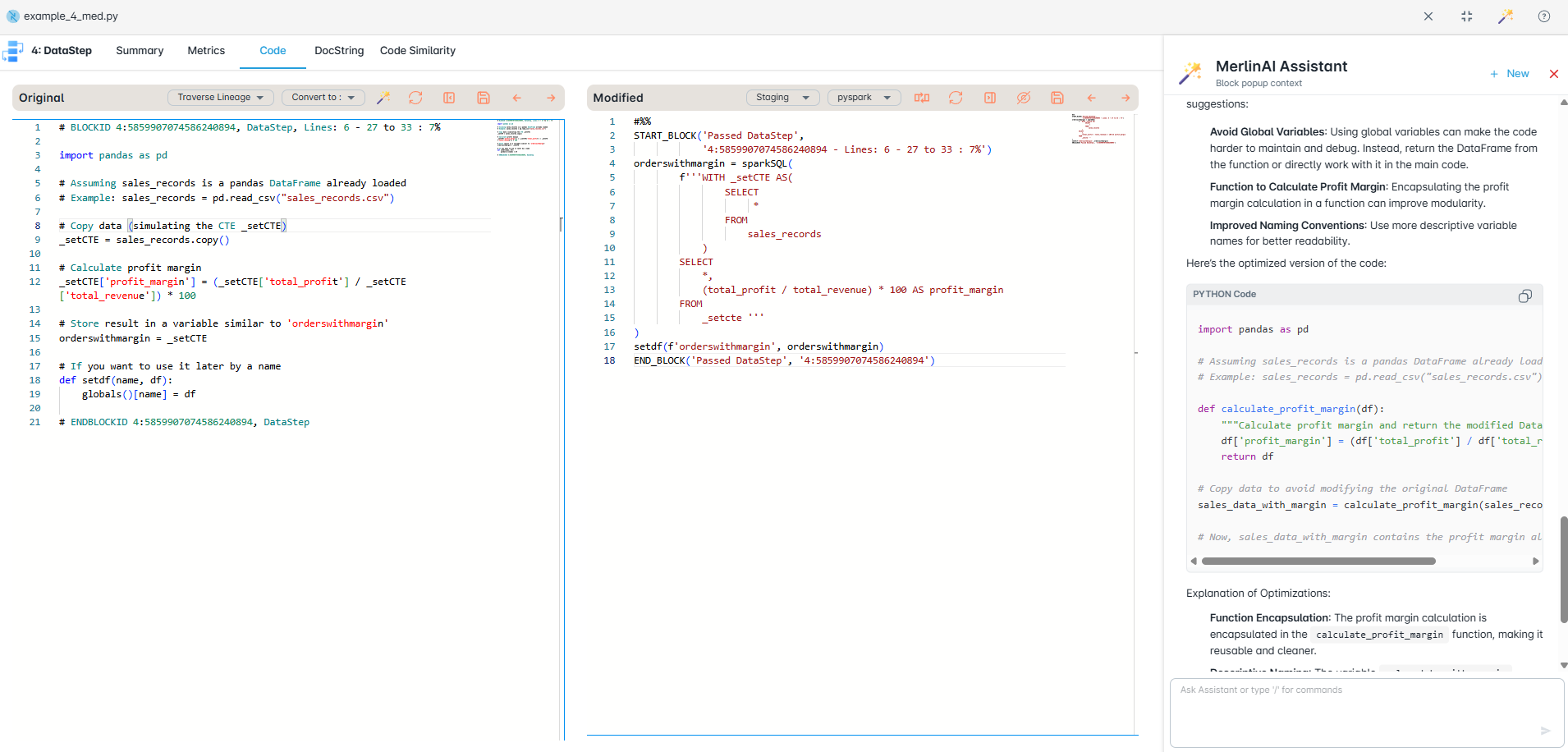
pandas to Polars or PySpark. SQL toward the warehouse. The conversion is a parse, not a rewrite you hope is close.
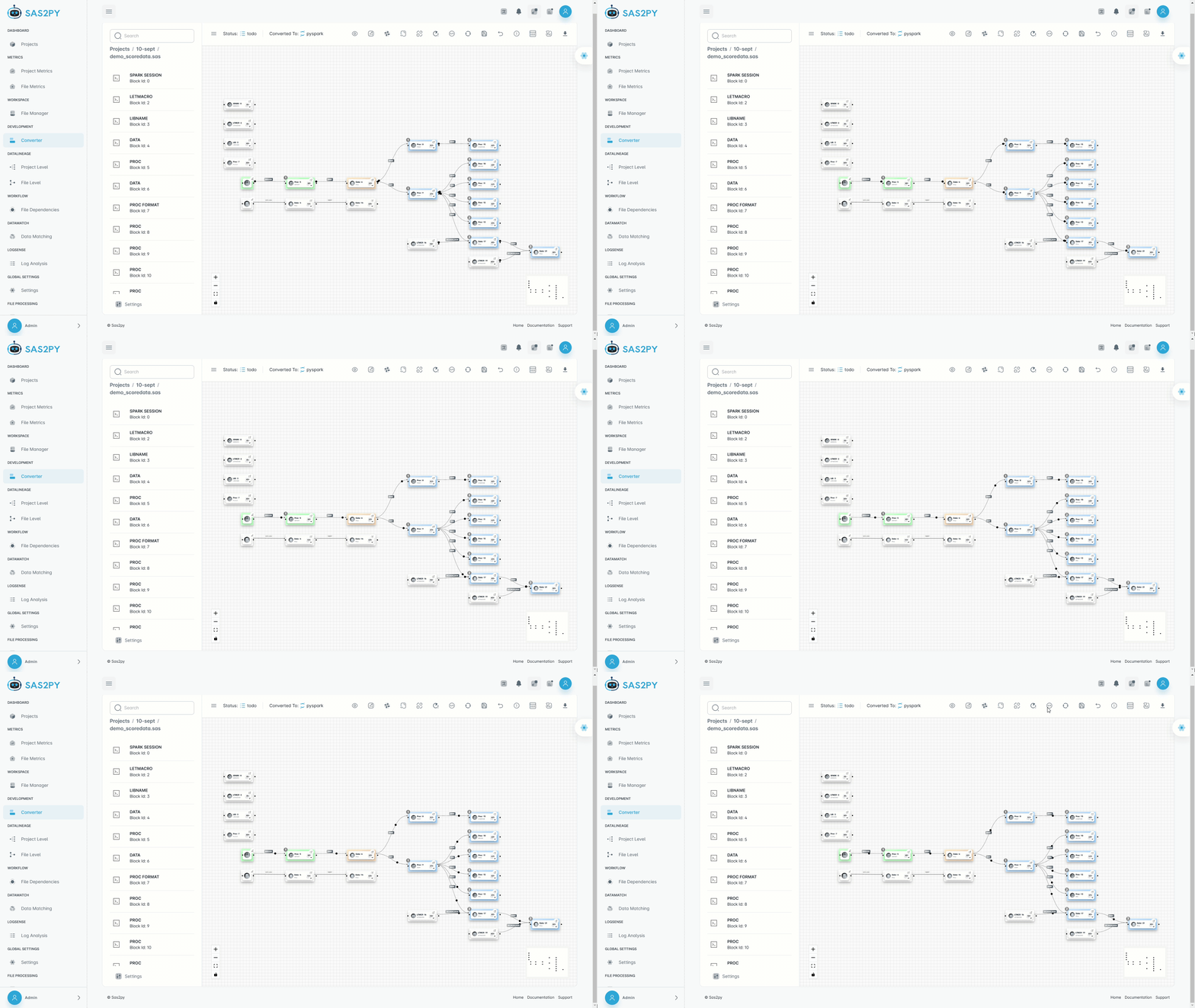
The lineage view updates as you type. Schema cards and previews sit under each step so you do not write profiling code to see the data.
Column-level comparison against the baseline. Keys, tolerances, pass or fail. Re-run it; the answer does not change.
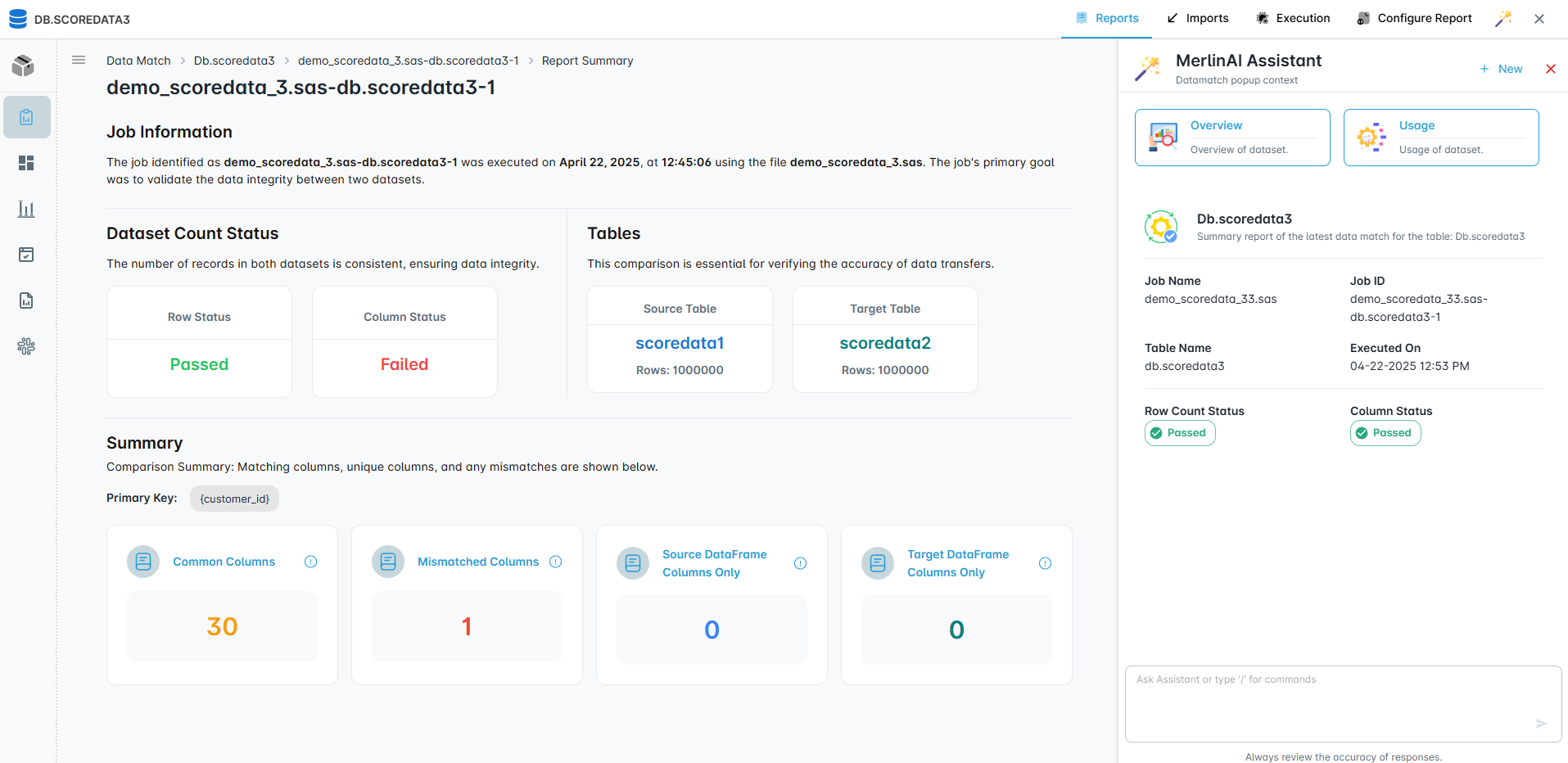
Modules, Spark jobs, or Airflow DAGs. Docs and dictionaries come from the parse so they do not rot the week after the handoff.
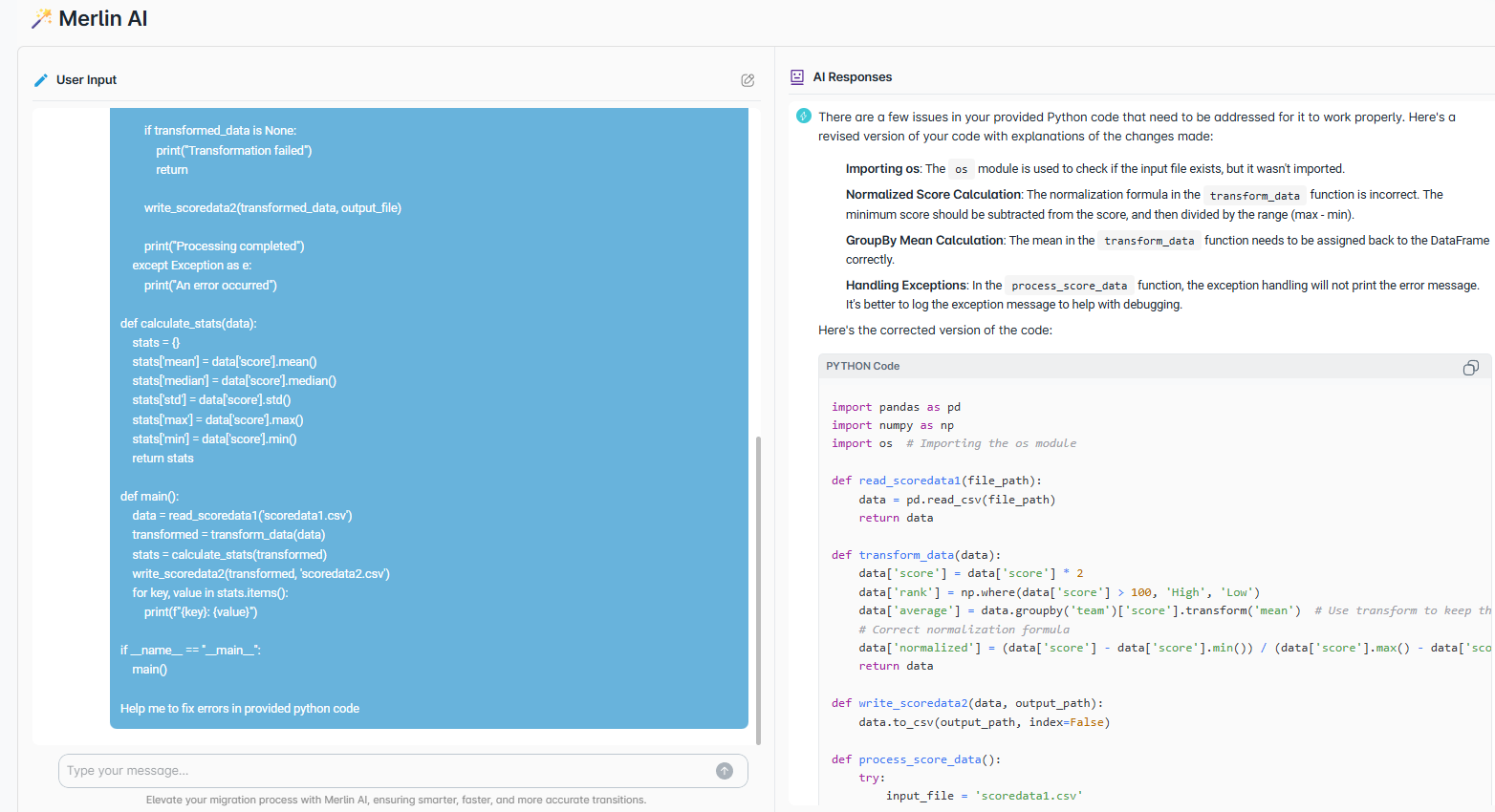
You do not stitch Jupyter, a catalog, Great Expectations, and a conversion script.
Scoring, dependency heat, and debt across the estate.
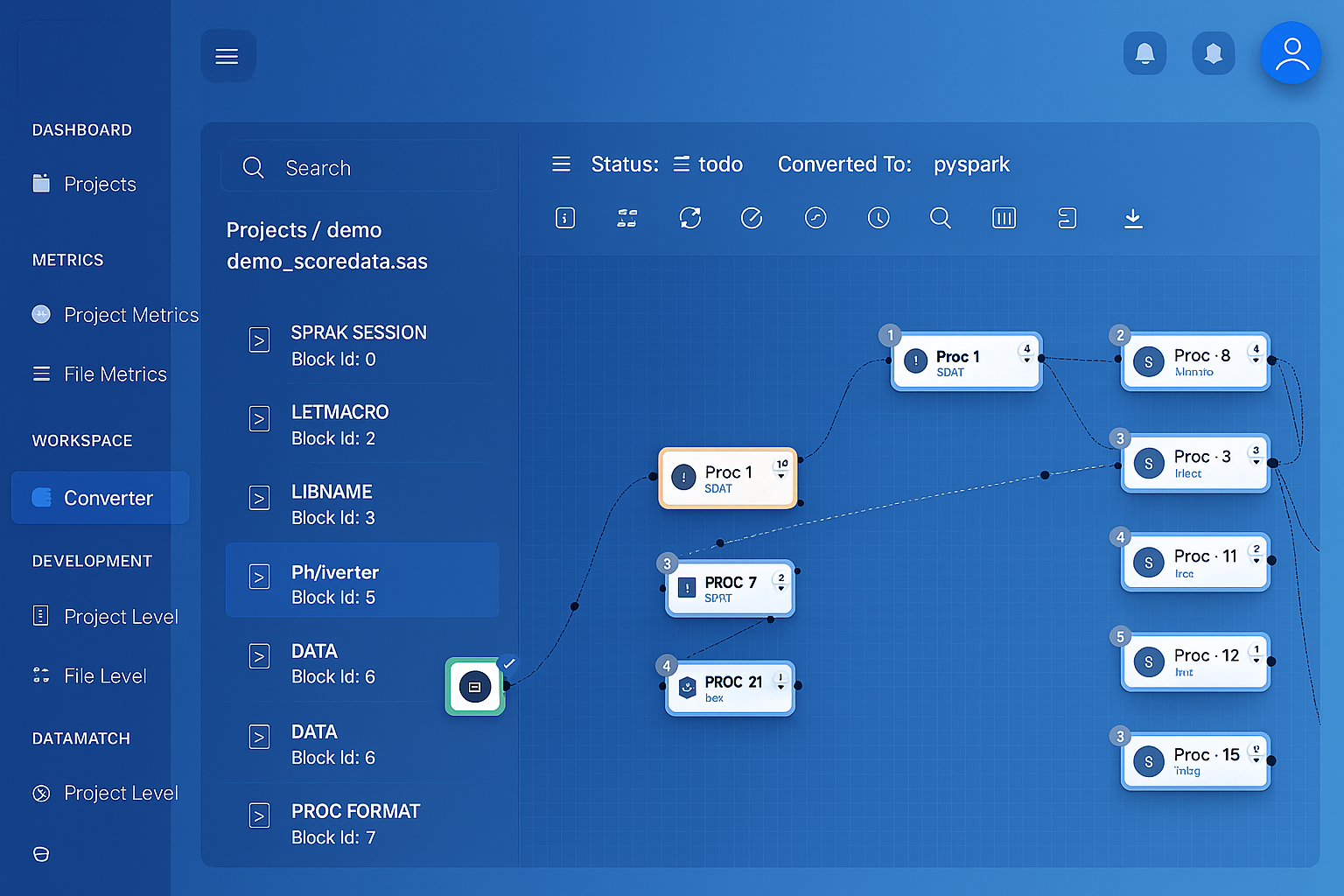
Trace any output column to its source. No annotations.
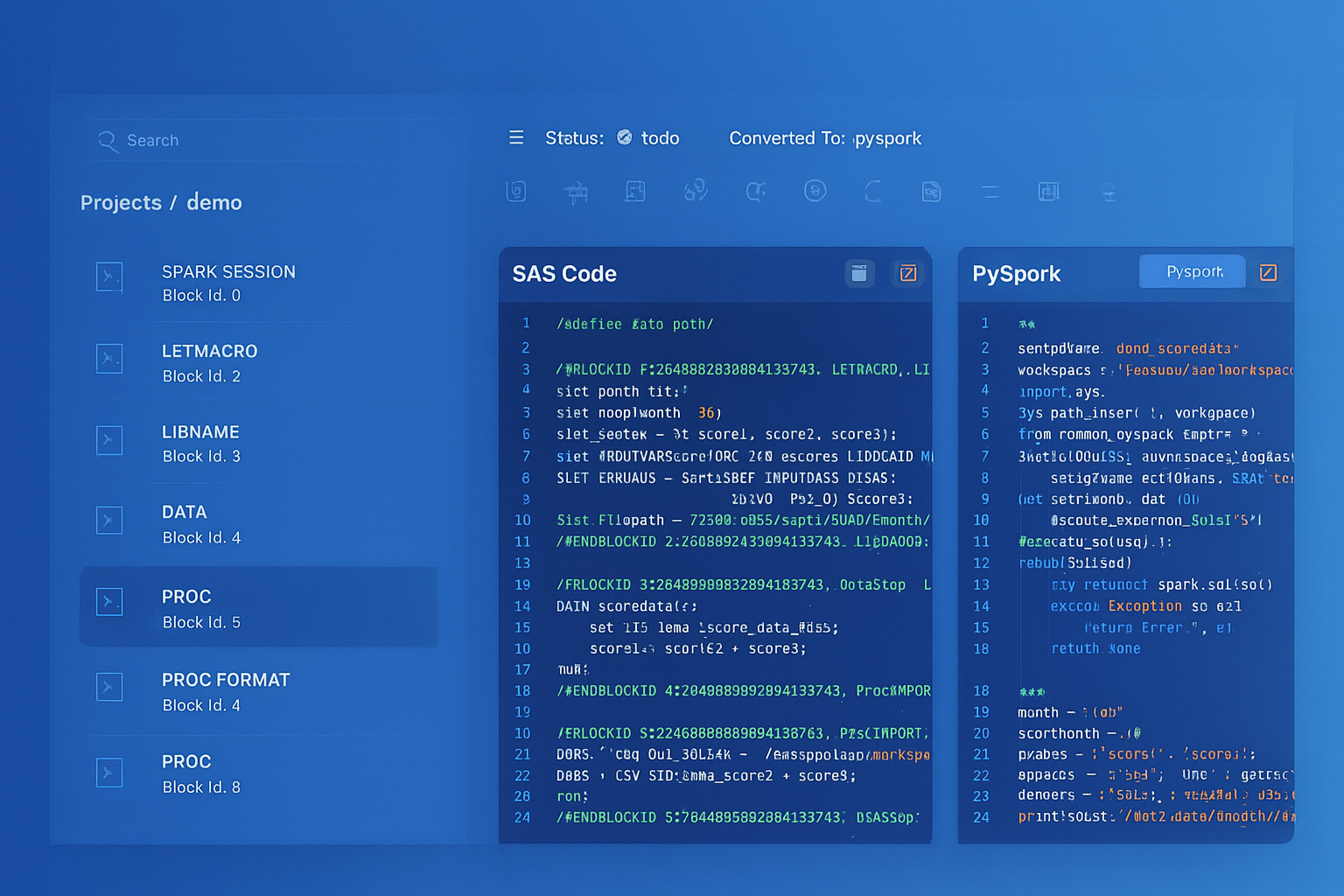
pandas, Polars, PySpark, Snowflake, Databricks SQL.
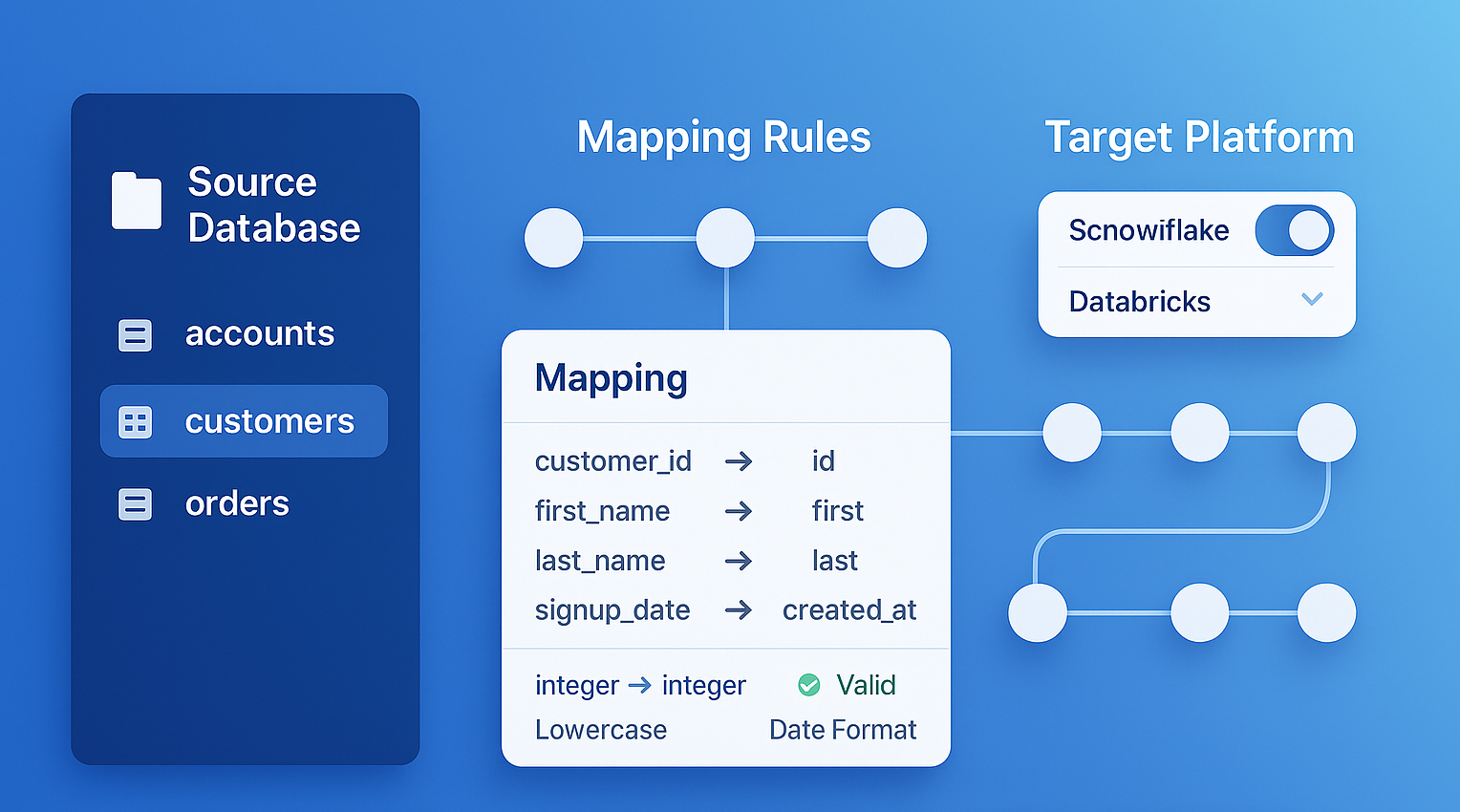
Every column's journey, extracted by the parser.
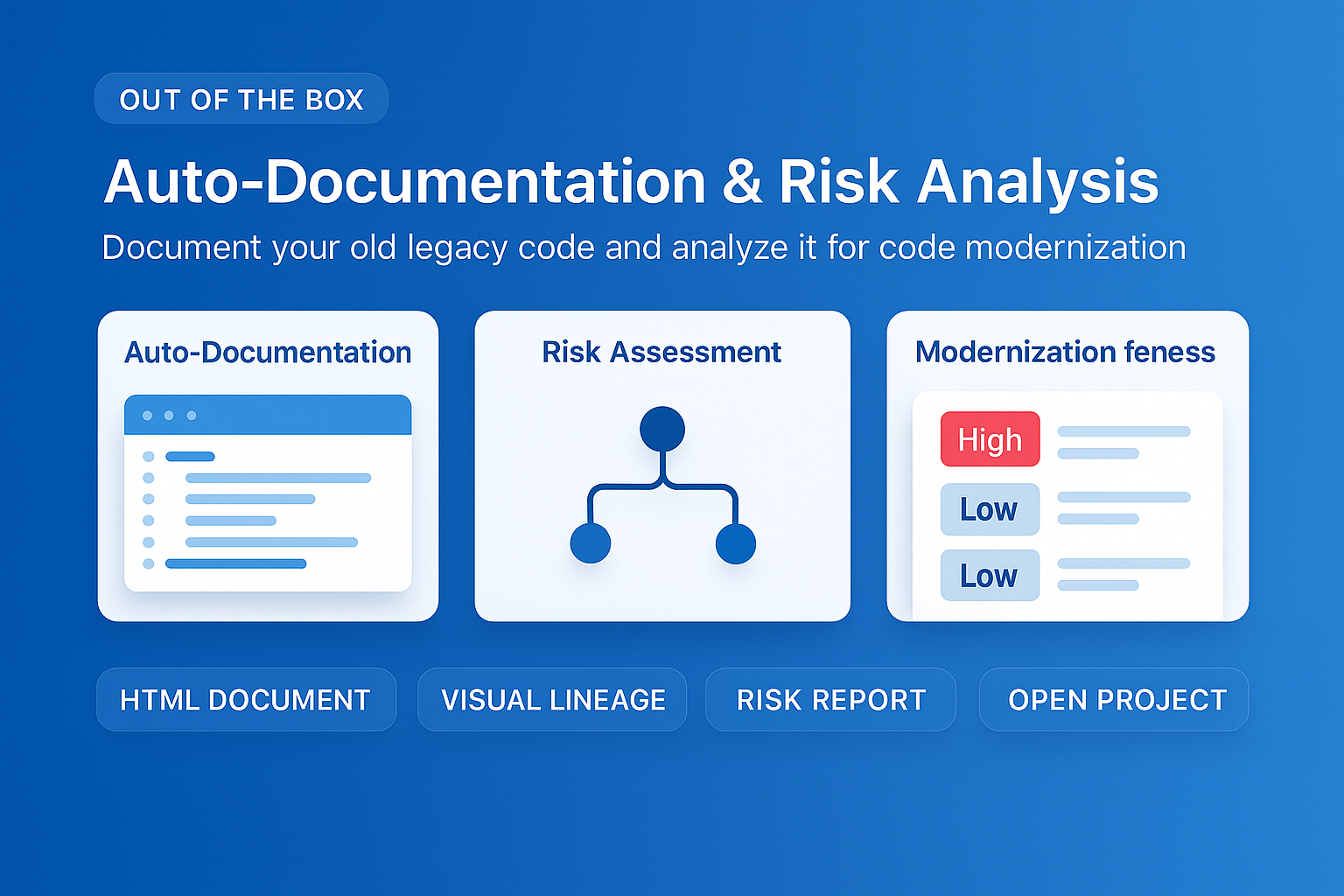
Dictionaries and pipeline docs from the actual graph.
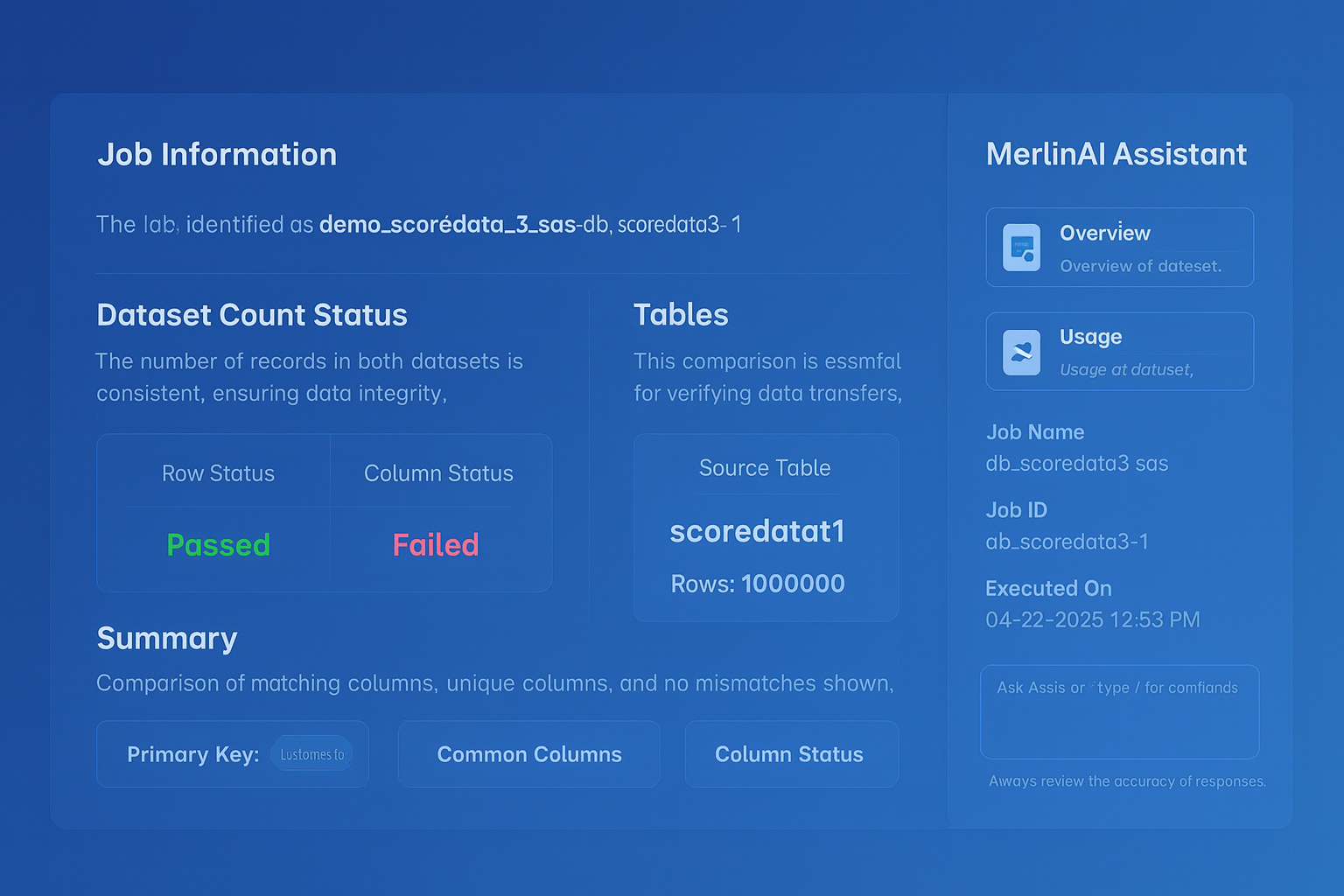
Row-level comparison with a pass/fail you can defend.
Step-through execution on Databricks or Snowflake. You see the step that stopped, not a stack trace from last night's job.
SaaS on the MigryX portal, or the same image behind your firewall. Air-gapped if required. AI is optional.
Start with a sample of your code, or book a demo and we will walk a job you already run.